
What Is an AI Employee? A Plain-English Guide for Mid-Michigan Small Business Owners
By Ken Whitinger, Mid Michigan Interactive
As technology continues to evolve, the concept of an AI employee has emerged as a transformative force in the business landscape. AI employees, powered by artificial intelligence, are designed to perform tasks traditionally handled by human workers, offering a range of functionalities that can enhance operational efficiency. This article aims to demystify AI employees, explaining their roles, benefits, and implications for small business owners in Mid-Michigan. Many local businesses face challenges in streamlining operations and improving customer engagement, and AI employees present a viable solution to these issues. We will explore the functionalities of AI employees, their impact on small businesses, and how they can be effectively implemented.
Functionalities of AI Employees:
AI employees are equipped with various functionalities that can significantly benefit businesses. These include:
- Task Automation: AI can automate repetitive tasks, freeing up human employees to focus on more strategic activities.
- 24/7 Availability: Unlike human workers, AI employees can operate around the clock, ensuring that customer inquiries and tasks are handled promptly.
- Data Analysis: AI can process and analyze large volumes of data quickly, providing insights that can inform business decisions.
- Lead Qualification: AI tools can help qualify leads by analyzing customer interactions and behaviors, streamlining the sales process.
These functionalities illustrate how AI employees can enhance productivity and efficiency in various business operations.
Implications for Small Business Owners in Mid-Michigan:
The integration of AI employees into small businesses in Mid-Michigan carries several implications.
- Cost Efficiency: By automating tasks, businesses can reduce labor costs and allocate resources more effectively.
- Enhanced Customer Engagement: AI employees can provide personalized interactions, improving customer satisfaction and loyalty.
- Scalability: AI solutions can easily scale with business growth, allowing companies to adapt to changing demands without significant additional investment.
- Local Expertise: AI tools can be tailored to meet the specific needs of Mid-Michigan businesses, leveraging local market insights.
Understanding these implications helps small business owners make informed decisions about adopting AI technologies.
What Defines an AI Employee and Its Role in Small Business Automation?
An AI employee is defined as a software-based entity that utilizes artificial intelligence to perform tasks typically carried out by human workers. These tasks can range from customer service interactions to data management and analysis. The role of AI employees in small business automation is to enhance efficiency by taking over repetitive and time-consuming tasks, allowing human employees to focus on higher-level strategic initiatives. This shift not only improves productivity but also enables businesses to respond more swiftly to market changes and customer needs.
How Does AI Automation Streamline Marketing and Operational Tasks?
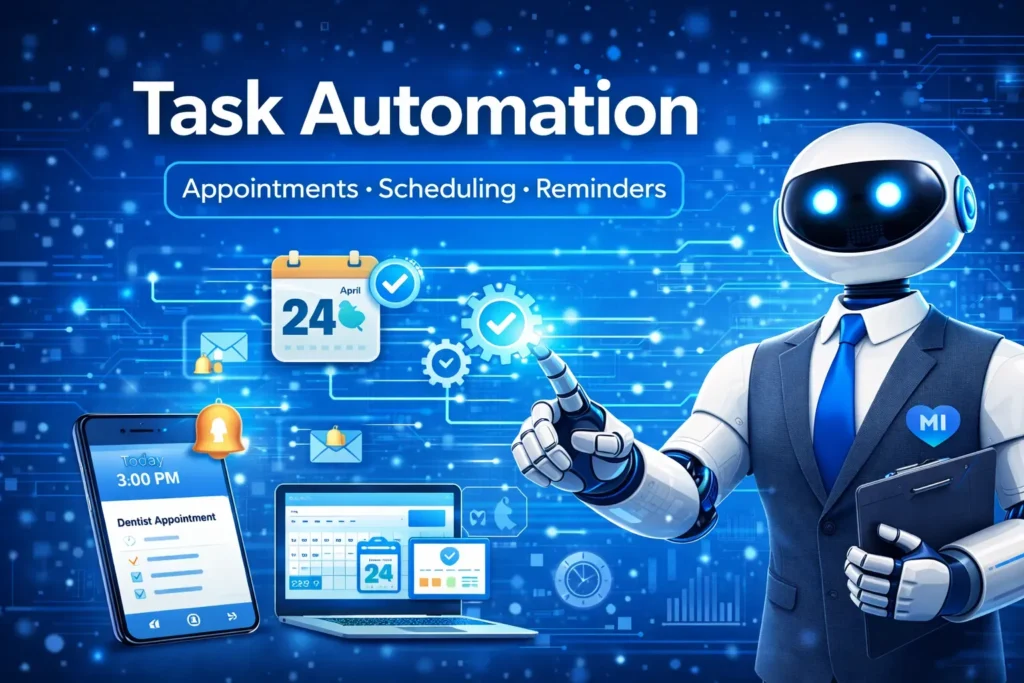
AI automation plays a crucial role in streamlining both marketing and operational tasks.
- Customer Support Automation: AI chatbots can handle customer inquiries, providing instant responses and freeing up human agents for more complex issues.
- Marketing Automation: AI tools can analyze customer data to create targeted marketing campaigns, optimizing outreach efforts.
- Data-Driven Insights: AI can generate insights from customer interactions, helping businesses refine their strategies based on real-time feedback.
- Operational Efficiency: By automating routine tasks, businesses can reduce errors and improve overall workflow efficiency.
These capabilities demonstrate how AI can transform marketing and operational processes, leading to better outcomes for businesses.
Indeed, studies confirm that automating routine processes and customer support with AI significantly enhances overall business efficiency and customer response times.
AI Automation for Small Business Efficiency & Customer Service
Automation of routine processes, such as administrative tasks and customer support, helps to reduce the time spent on these operations and increases overall business efficiency. In addition, companies that have implemented AI chatbots and virtual assistants have reduced response times to customer queries.
AUTOMATION IN DIGITAL MARKETING: HOW AI TECHNOLOGIES HAVE CHANGED MARKETING STRATEGIES, YD Gorodetskiy, 2025
What Are Common Examples of AI Employees in Digital Marketing?
In the realm of digital marketing, several common examples of AI employees include:
- Chatbots: These AI-driven tools engage with customers in real-time, answering questions and guiding them through the purchasing process.
- Virtual Assistants: AI virtual assistants can manage schedules, send reminders, and handle administrative tasks, improving productivity.
- Content Creation Tools: AI can assist in generating content for blogs, social media, and marketing materials, saving time and resources.
- Data Analysis Tools: These tools analyze customer data to identify trends and insights, informing marketing strategies.
These examples highlight the versatility of AI employees in enhancing digital marketing efforts.
What Are the Key Benefits of AI Employees for Mid-Michigan Small Businesses?
AI employees offer several key benefits for small businesses in Mid-Michigan, including:
- Cost Savings: Automating tasks reduces the need for additional staff, leading to significant cost savings.
- Efficiency Improvements: AI can perform tasks faster and with greater accuracy than humans, enhancing overall operational efficiency.
- Enhanced Customer Service: AI employees can provide immediate responses to customer inquiries, improving satisfaction and retention.
- Data-Driven Insights: AI tools can analyze customer data to provide actionable insights, helping businesses make informed decisions.
These benefits illustrate the value of integrating AI employees into business operations.
How Can AI Employees Improve Lead Generation and Customer Engagement?
AI employees can significantly enhance lead generation and customer engagement through various mechanisms:
- 24/7 Availability: AI tools can engage with potential customers at any time, ensuring that no lead is missed.
- Lead Automation: AI can automate the process of qualifying leads, allowing sales teams to focus on high-potential prospects.
- Personalized Customer Interactions: AI can analyze customer behavior to tailor interactions, making them more relevant and engaging.
- Streamlined Communication: AI tools can facilitate communication between businesses and customers, ensuring timely responses and follow-ups.
These strategies demonstrate how AI can transform the customer engagement landscape.
In What Ways Do AI Employees Enhance Efficiency and Reduce Costs?
AI employees enhance efficiency and reduce costs in several ways:
- Increased Efficiency: By automating routine tasks, AI allows human employees to focus on more strategic initiatives, improving overall productivity.
- Cost Savings: Reducing the need for additional staff through automation leads to significant cost reductions.
- Higher Revenue: Improved efficiency and customer engagement can lead to increased sales and revenue growth.
- Scalability: AI solutions can easily scale with business growth, allowing companies to adapt to changing demands without significant additional investment.
These factors illustrate the financial and operational advantages of adopting AI employees.
Further research supports the notion that AI significantly boosts labor productivity and employee efficiency within small and medium enterprises.
AI’s Impact on SME Employee Efficiency & Productivity
This research highlights AI’s transformative impact across small and medium enterprises (SMEs). Their research highlights that AI-based patents have a positive effect on labor productivity.
Enhancing employee efficiency and performance in industry 5.0 organizations through artificial intelligence integration, DA Joshi, 2023
Which AI Tools and Digital Marketing Automation Solutions Are Available for Michigan Businesses?
Several AI tools and digital marketing automation solutions are available for Michigan businesses, including:
- AI Employee: A comprehensive solution for automating various business processes.
- AI Voice Services: Tools that enhance customer interactions through voice recognition and response.
- Lead Automation: Solutions designed to streamline the lead qualification process.
- Business Process Automation: Tools that automate routine business tasks, improving efficiency.
These solutions provide businesses with the necessary tools to leverage AI effectively.
What AI Automation Platforms Does Mid Michigan Interactive Offer?
Mid Michigan Interactive offers a range of AI automation platforms tailored for small and medium-sized businesses. These include:
- AI Employee Features: Tools designed to automate various business functions, enhancing productivity.
- AI Voice Services: Solutions that improve customer interactions through advanced voice recognition technology.
- Lead Automation Features: Tools that streamline the lead qualification process, allowing businesses to focus on high-potential prospects.
- Custom Automation Solutions: Tailored solutions designed to meet the specific needs of individual businesses.
These offerings position Mid Michigan Interactive as a leader in providing AI solutions for local businesses.
How Do AI Tools Integrate with WordPress and ADA Compliance Services?
AI tools can seamlessly integrate with existing systems, including WordPress and ADA compliance services.
- Compatibility with Existing Systems: Many AI tools are designed to work with popular platforms like WordPress, ensuring smooth integration.
- APIs for Integration: Application Programming Interfaces (APIs) allow for easy connection between AI tools and existing business systems.
- Custom Website Design: AI can assist in creating websites that are not only visually appealing but also compliant with ADA standards.
This integration capability ensures that businesses can leverage AI without overhauling their existing systems.
How Can Small Business Owners Implement AI Employees Effectively?
To implement AI employees effectively, small business owners should consider the following strategies:
- Identify Goals: Clearly define what tasks or processes you want to automate with AI.
- Assess Current Systems: Evaluate existing systems to determine how AI can be integrated.
- Choose the Right Platform: Select AI tools that align with your business needs and goals.
- Train the AI: Ensure that the AI systems are properly trained to perform the desired tasks effectively.
These steps provide a roadmap for successful AI implementation.
What Are the Step-by-Step Processes to Adopt AI Automation in Marketing?
Adopting AI automation in marketing involves several key steps:
- Identify High-Impact Processes: Determine which marketing processes would benefit most from automation.
- Define Clear Goals: Set specific objectives for what you want to achieve with AI automation.
- Choose Appropriate AI Tools: Select tools that align with your marketing goals and processes.
- Test a Single Use Case: Start with one area of automation to evaluate effectiveness before scaling.
Following these steps can help businesses successfully integrate AI into their marketing strategies.
What Challenges Should Businesses Anticipate During AI Integration?
While integrating AI can offer significant benefits, businesses should be aware of potential challenges, including:
- Cost Barriers: Initial investment in AI technology can be high, which may deter some businesses.
- Time Constraints: Implementing AI solutions can be time-consuming, requiring careful planning and execution.
- Lack of Technical Expertise: Many small businesses may lack the technical knowledge needed to implement AI effectively.
- Complex Integration: Integrating AI with existing systems can be complex and may require specialized support.
Understanding these challenges can help businesses prepare for a smoother integration process.
This perspective is echoed by research that highlights the specific applications, benefits, and challenges SMEs encounter when adopting AI, often due to resource and expertise limitations.
AI Applications, Benefits & Challenges for SMEs
Small and medium-sized enterprises (SMEs) play a crucial role in the global economy, yet they often face significant challenges in implementing cutting-edge technologies such as artificial intelligence (AI) due to limited resources and expertise. This study aims to address this gap by identifying the most important applications of AI for SMEs, exploring their benefits and challenges and assessing their impact on business processes.
Artificial intelligence for small and medium-sized enterprises: Identifying key applications and challenges, M Schönberger, 2023
What Are the Future Trends and Local Case Studies of AI Employee Adoption in Mid Michigan?
The future of AI employee adoption in Mid Michigan is promising, with several emerging trends:
- Emerging AI Trends: As technology advances, AI capabilities will continue to expand, offering new opportunities for businesses.
- Local Case Studies: Several Mid-Michigan businesses have successfully integrated AI employees, showcasing the potential benefits and applications.
- Future Predictions: Experts predict that AI will play an increasingly central role in business operations, driving efficiency and innovation.
These trends highlight the growing importance of AI in the local business landscape.
What Frequently Asked Questions Do Small Business Owners Have About AI Employees?
How Does AI Automation Affect Small Business Workforce Dynamics?
AI automation significantly impacts workforce dynamics by changing the roles and responsibilities of employees. As AI takes over repetitive tasks, human workers can focus on more strategic and creative aspects of their jobs. This shift can lead to increased job satisfaction and productivity, as employees engage in more meaningful work. However, it may also require reskilling and upskilling to adapt to new technologies and workflows.
What Is the Expected ROI from Investing in AI Employees?
Investing in AI employees can yield substantial returns on investment (ROI) for businesses. The initial costs of implementing AI solutions can be offset by long-term savings in labor costs and increased efficiency. Businesses can expect to see operational savings and revenue growth as AI enhances productivity and customer engagement. Metrics such as reduced labor costs, improved sales conversion rates, and enhanced customer satisfaction can help quantify the ROI from AI investments.
To ensure your website remains compliant with accessibility standards, consider exploring ADA compliance services.
For businesses looking to enhance their online presence, partnering with a reliable website designing company can make a significant difference.
Additionally, maintaining your WordPress site is crucial; consider WordPress website maintenance services to keep your site running smoothly.
For those seeking to improve their search engine rankings, SEO services can provide the necessary expertise and strategies.